50 Best Mindfulness Books (Reviews + PDF’s)
 Mindfulness books are exploding in popularity in Western culture. Countless resources are now available on the topic, and it can be hard to know where to start.
This article provides a wide-ranging collection of books relating to mindfulness. Whether you’re looking to mindfulness as a way to help yourself, your children, or your clients, and whether you prefer traditional books, audiobooks, or even free PDFs, you’ll find something here for you.
So go ahead and dive in. We hope you find what you are looking for.
Before you start reading this article, I recommend you to download our three Mindfulness Exercises Pack for free. With this package, you will not just be able to understand mindfulness on a theoretical level, but you’ll also have the tools to apply mindfulness in your work with clients or students.
This Article Contains:
- Our Picks: Top 5 Books on Mindfulness for Beginners
- Bestselling Mindfulness Books
- “The Little Book of Mindfulness”
- The 5 Best Mindfulness Meditation Books
- Mindful Eating Books
- Best Books on Mindful Parenting
- Better Start Young: The Best Mindfulness Books for Kids
- Mindfulness-Based Cognitive Therapy (MBCT) Books
- “Mindfulness: Finding Peace in a Frantic World”
- Jon Kabat-Zinn’s Books
- Freely Available Mindfulness PDFs
- Audiobooks on Mindfulness
- A Take-Home Message
Our Picks: Top 5 Books on Mindfulness for Beginners
If you don’t know how to get started with mindfulness, one of these books will help you out. These books are directed toward mindfulness newcomers, so you should feel comfortable picking up any of them in order to gain a foundational understanding of mindfulness.
1. Real-World Mindfulness for Beginners: Navigate Daily Life One Practice at a Time – Brenda Salgado
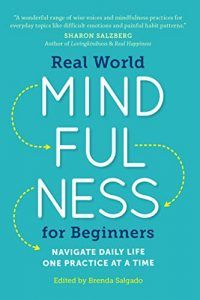 Brenda Salgado’s book for newcomers aims to introduce mindfulness by relating it to daily life.
She introduces several mindfulness practices beginners can immediately dive into, no matter how new they are to mindfulness. Some of these exercises are so short they can fit into any schedule.
The book also comes recommended by Sharon Salzberg, an accomplished mindfulness leader. (She’ll show up again later in this article.)
Available on Amazon.
2. Mindfulness for Beginners: A Simple Concise & Complete Guide to Mindfulness Meditation – Jeffrey Holloway
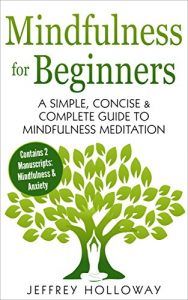 Jeffrey Holloway’s book is an introduction to mindfulness meditation both in theory and in practice.
This book will help readers learn the science of mindfulness as well as different ways to incorporate meditation into their lives.
Holloway began learning about mindfulness as a way to combat his anxiety, so people struggling with anxiety might find this book particularly helpful.
Available on Amazon.
3. Mindfulness for Beginners: Practical Guide to Mindfulness Meditation & Productive Life: Tips for the 21st Century Human – Martin Lippmann
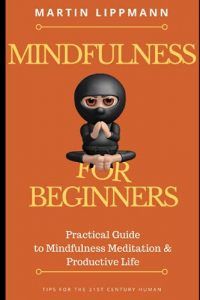 Only 49 pages long, Martin Lippmann’s book is one of the shortest books on this list, so it might be a good option for people itching to get going, fast.
The book focuses on teaching everything you need to know to start a mindfulness meditation practice, as well as tips on how to maximize the effectiveness of your meditation sessions.
This book is a good option for someone who is already sold on mindfulness and is looking for a quick way to get started.
Available on Amazon.
4. Mindfulness for Beginners: How to Live in the Moment, Stress and Worry Free in a Constant State of Peace and Happiness – Yesenia Chavan
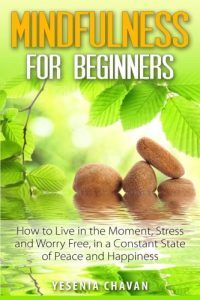 Yesenia Chavan’s introduction to mindfulness is not the shortest book on this list but is still a breezy read. It spends a bit more time convincing the reader that mindfulness is beneficial, then it suggests ways to start your own mindfulness practice, from meditation sessions to mindful breathing exercises.
Chavan’s book is aimed at people who want to dive headfirst into mindfulness and completely change their lives. This is because Chavan herself used mindfulness to attain a healthier weight and a happier lifestyle.
Available on Amazon.
5. Mindfulness: Ultimate Beginners Guide to Embrace Peace, Happiness, and Zen by Eliminating Stress and Anxiety – Kemal Ravakar
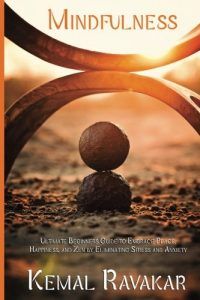 Kemal Ravakar’s book shows beginners that there are countless times throughout the day to practice mindfulness and that anyone can start applying mindfulness to their lives.
This makes it a good solution for people who want to learn the basics of mindfulness in a way that fits their schedule, whether they can afford to dedicate a lot of time to mindfulness or just a little bit.
A great book for people looking to learn from a Zen master rather than someone with a more Western background.
Available on Amazon.
Bestselling Mindfulness Books
 For those who prefer proven commodities, we’ve picked some mindfulness books that have already helped thousands of people on their way to becoming bestsellers.
These books became bestsellers by appealing to a wide range of people, so it is likely that you might find value in them, too.
1. The Things You Can See Only When You Slow Down: How to Be Calm and Mindful in a Fast-Paced World – Haemin Sunim
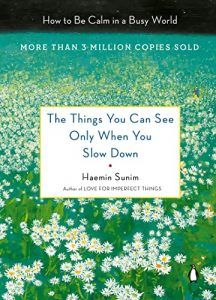 Haemin Sunim’s book is an international bestseller that aims to help people adopt mindfulness in their lives in order to be happier. The author was born in South Korea but was educated in the United States, giving him a multicultural perspective that many people find valuable.
In his book, Sunim stresses the importance of fostering healthy relationships with others and the necessity of having a strong relationship with oneself. This book can help you deepen your existing mindfulness practice, but might also convince someone without an existing practice to establish one.
Available on Amazon.
2. Mindfulness in Plain English – Bhante Henepola Gunaratana
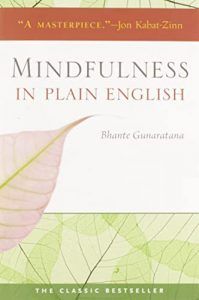 Bhante Henepola Gunaratana’s book on mindfulness is for people who want to completely change their lives with mindfulness and are ready to commit. It is short enough to read over and over again but long enough to make a lasting impact on the reader’s life.
The author is from Sri Lanka and has experience teaching in the United States, which makes this book helpful for those in the West who are interested in Eastern traditions. This bestseller comes recommended by mindfulness experts like Jon Kabat-Zinn, who we’ll discuss later.
Available on Amazon.
3. Declutter Your Mind: How to Stop Worrying, Relieve Anxiety, and Eliminate Negative Thinking – S.J. Scott and Barrie Davenport
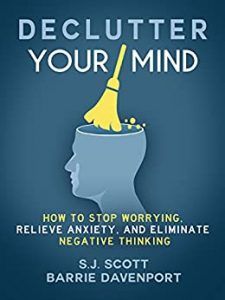 S.J. Scott and Barrie Davenport’s bestselling book is focused on the benefits of mindfulness, such as improved relationships, reduced anxiety, and decreased mental clutter. The authors explain how to achieve these benefits through mindfulness meditation and other exercises.
The book is designed to be actionable, so anyone can pick it up and start benefiting from mindfulness right away. That fact, combined with its fairly short length, makes this a great choice for people looking for quick results.
Available on Amazon.
4. The Untethered Soul: The Journey Beyond Yourself – Michael A. Singer
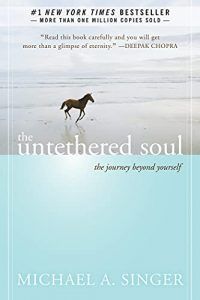 Michael A. Singer’s book aims to help the reader discover themselves through their inner space and inward journey. Singer argues that practicing mindfulness is the best way to become fully conscious and free.
He helps the reader achieve this by explaining how to let go of painful memories and start living in the moment. This bestseller has found success around the world, showing that its lessons are accessible to people of many cultures.
Available on Amazon.
5. Start Where You Are: A Journal for Self-Exploration – Meera Lee Patel
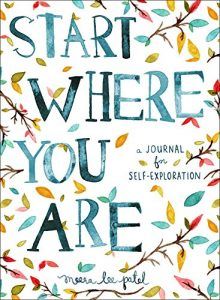 Meera Lee Patel’s bestseller is the most interactive book on this list, as it’s formatted like a journal. It includes writing prompts and creative exercises that help readers discover mindfulness in their own ways.
This book is an excellent option for independent learners who prefer interactive experiences to more traditional books. It is also the clear choice for the aesthetically minded, as it is presented in a more visually pleasing way than the traditional books on this list.
Available on Amazon.
“The Little Book of Mindfulness”
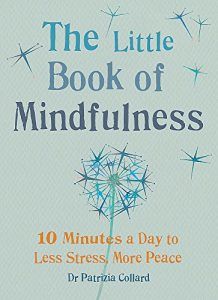 The Little Book of Mindfulness: 10 Minutes a Day to Less Stress, More Peace by Patrizia Collard (2014) aims to be an easy-to-follow path to mindful awareness for anyone who has ten minutes a day to commit to it.
Collard is a psychotherapist with plenty of experience in psychology and mindfulness, so you can have faith that the book’s teachings are rooted in science. This book is a great way to learn and apply mindfulness in bite-sized chunks, and with just under 100 pages, it is a quick read.
Available on Amazon.
The 5 Best Mindfulness Meditation Books

If you are interested in mindfulness meditation, this section is for you.
From guided mindfulness meditation sessions to a full mindfulness meditation program, the tools in these books can help you build or enrich your practice.
1. The Miracle of Mindfulness: An Introduction to the Practice of Meditation – Thich Nhat Hanh
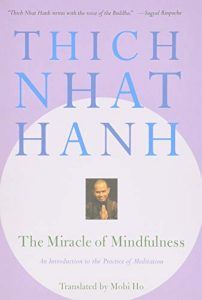 Thich Nhat Hanh’s introduction to mindfulness meditation takes a casual approach by pointing out the opportunities for practicing mindfulness in the things you already do.
Rather than suggesting you set aside hours per week for mindfulness meditation, Nhat Hanh suggests practicing mindfulness while doing everyday things like washing the dishes.
Nhat Hanh is a Zen master who is well-respected in the mindfulness community and beyond—Martin Luther King Jr. even nominated Nhat Hanh for a Nobel Peace Prize.
For readers who prefer to learn from proven authorities, you cannot do much better than a book by Nhat Hanh.
Available on Amazon.
2. Mindfulness Meditation: Your Guide To Achieving A Life of Peace By Reducing Stress and Anxiety Through Mindfulness Meditation – Daniel K. Barton
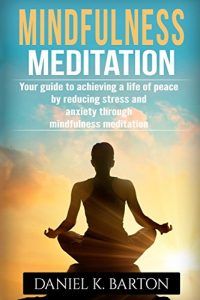 Daniel K. Barton’s book is an all-in-one guide to mindfulness meditation, covering the history of mindfulness meditation, the benefits of mindfulness, and the ways to practice it.
The author does not assume the reader has already decided to begin a mindfulness meditation practice—Barton explains to benefits before giving examples.
This book is a good option for people who like having a lot of information before they start doing something, as Barton is very convincing about the benefits of a mindfulness meditation practice.
Available on Amazon.
3. Five Minute Meditation: Mindfulness, Stress Relief, and Focus for Absolute Beginners – Lisa Shea
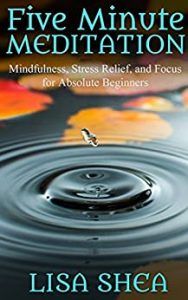 This mindfulness meditation handbook aims to help “absolute beginners” begin a meditation practice, starting with just five minutes a day. It is a very short read, and the Kindle edition is completely free, so readers have nothing to lose.
If you are already sold on mindfulness meditation but don’t know where to start, this is a good, low-commitment option. You might need to eventually supplement this book with something else on this list, but it’s still a great start.
Available on Amazon.
4. Real Happiness: The Power of Meditation: A 28-Day Program – Sharon Salzberg
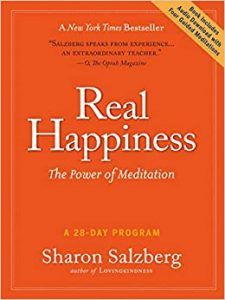 On the opposite side of the spectrum is Real Happiness, a full mindfulness meditation program from Sharon Salzberg, a leading figure in the world of mindfulness and mindfulness meditation.
This book is written for newcomers to mindfulness meditation, and it provides four weeks of guidance. For people who want to get into mindfulness meditation but need a rigid schedule laid out for them, this is a great option.
Available on Amazon.
5. Mindfulness: A Mindful Eternity in Meditation: Mindfulness Meditation Guide for All and All Moments – Dhumavarna Patkar
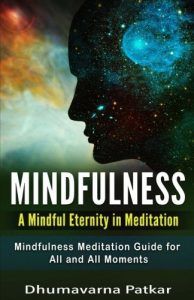 This book is another how-to guide on mindfulness meditation, though it relates mindfulness to Buddhism more than the other books on this list. It discusses the history of mindfulness as it relates to Buddhism before instructing the reader on how to practice mindfulness meditation.
This is a good option for anyone who wants to learn mindfulness meditation with a focus on how it pertains to Buddhism, though its mindfulness teachings are solid on their own.
Available on Amazon.
Find a list of the best meditation books here. These detailed, science-based exercises will help you or your clients enjoy the benefits of mindfulness and create positive shifts in their mental, physical, and emotional health.
Download 3 Free Mindfulness Exercises (PDF)
Mindful Eating Books
 Mindful eating is an antidote for emotional eating, in which people eat for reasons other than hunger.
Of course, emotional eating can lead to health problems, and that’s where mindfulness comes in. By harnessing the power of mindfulness when you eat, you can lead a healthier and more mindful life.
1. The Mindfulness-Based Eating Solution: Proven Strategies to End Overeating, Satisfy Your Hunger, and Savor Your Life – Lynn Rossy
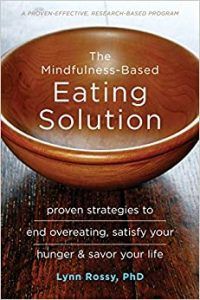 This book aims to teach people about mindful eating so they can be happier with their bodies and lose weight if needed. It is written by Lynn Rossy, a clinical psychologist who’s on the board of directors for The Center for Mindful Eating.
The book helps readers be more mindful while eating by helping them figure out how to better understand their bodies and understand the reasons why they eat. If you often find yourself eating food just because you’re bored, or for any other reasons besides hunger, this book will give you the strategies you need to stop.
Available on Amazon.
2. Mindful Eating: A Guide to Rediscovering a Healthy and Joyful Relationship with Food – Jan Chozen Bays
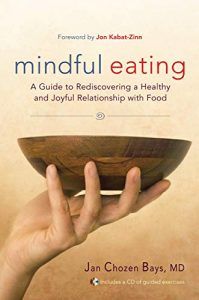 This book on mindful eating comes from Jan Chozen Bays, a medical doctor who’s also a Zen master. The book helps people become more mindful by identifying eating habits and patterns and understanding when and why they eat.
It also includes a CD with guided meditation exercises. The included CD makes this book an excellent option for people who learn best from multiple forms of media, not just reading.
Available on Amazon.
3. Savor: Mindful Eating, Mindful Life – Thich Nhat Hanh and Lilian Cheung
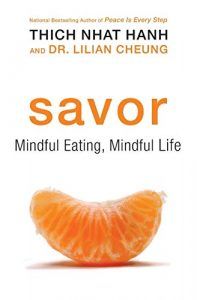 This book is a collaboration between the aforementioned Thich Nhat Hanh and nutritionist Lilian Cheung, a lecturer at the Harvard T.H. Chan School of Public Health.
The two combine their expertise for a well-rounded approach to mindful eating backed by science. Anyone who is drawn to mindful eating for nutritional reasons should start with this book. The two authors’ wealth of knowledge of mindfulness and nutrition cannot be matched.
Available on Amazon.
4. 50 Ways to Soothe Yourself Without Food – Susan Albers
 For those of us who like having options, Susan Albers, who has a doctorate in psychology, has put together a great handbook for mindful eating outlining 50 ways to avoid eating food for the wrong reasons.
The author hopes that food cravings can be fought by turning to this book and trying one of the strategies. This book is a good option for people who do not need to be sold on mindful eating and are just looking for suggestions for how to start practicing it. It’s a good reference book to keep around for those times you need it most.
Available on Amazon.
5. Mindful Emotional Eating: Mindfulness Skills to Control Cravings, Eat in Moderation and Optimize Coping – Pavel G. Somov
 Pavel G. Somov’s book on mindful eating might be most helpful for clinicians, though anyone who wants to start practicing mindful eating will find its lessons useful.
Somov, who is a licensed psychologist, believes that “emotional eating is a legitimate form of self-care” and argues that instead of avoiding emotional eating altogether, people can learn how not to overdo it.
Readers who are looking for a nonjudgmental overview of mindful eating techniques might appreciate this book more than some of the others on this list.
Available on Amazon.
Mindful eating with Mayo – Karen Mayo
Best Books on Mindful Parenting

Mindful parenting is a school of thought that aims to improve the lives of parents, kids, and families as a whole.
By teaching parents mindfulness strategies, parents can raise their children in a more holistic way, and even pass mindfulness techniques on to their children. This benefits the whole family.
1. Mindful Parenting: Simple and Powerful Solutions for Raising Creative, Engaged, Happy Kids in Today’s Hectic World – Kristen Race
 Kristen Race’s book aims to teach parents how to raise their kids in a world filled with stress. Race is an expert in family psychology who aims to help parents and children reduce their stress levels while recognizing that stress is unavoidable.
The author has two children of her own, so you can trust that her teachings are based on real-world experience.
Available on Amazon.
2. Mindful Discipline: A Loving Approach to Setting Limits and Raising an Emotionally Intelligent Child – Shauna Shapiro and Chris White
 Mindful Discipline is a dual effort from Shauna Shapiro, a clinical psychologist and mindfulness expert, and Chris White, a pediatrician and life coach. This combined experience leads to a holistic approach to mindful parenting that combines neuroscience and mindfulness.
The authors’ goal with the book is to teach parents five simple principles for raising their children with confidence, starting with unconditional love and ending with learning from mistakes. This is a book for parents who want teachings that integrate neuroscience and social psychology.
Available on Amazon.
3. The Awakened Family: A Revolution in Parenting – Shefali Tsabary
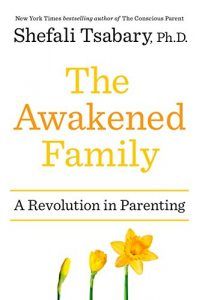 The Awakened Family is another offering from a clinical psychologist, and this one comes recommended by Oprah Winfrey. Author Shefali Tsabary prides herself on combining Western and Eastern teachings.
The goal of this book is to help parents raise children who can thrive, starting by increasing the well-being of the parents themselves.
Available on Amazon.
4. The Mindful Child: How to Help Your Kid Manage Stress and Become Happier, Kinder, and More Compassionate – Susan Kaiser Greenland
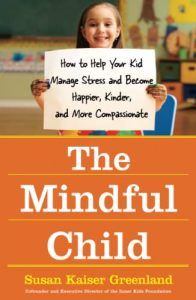 Susan Kaiser Greenland’s book is based on her mindful parenting program, which has been endorsed by the Mindfulness Awareness Research Center at the University of California, Los Angeles. In this book, Greenland teaches parents a step-by-step approach for teaching their children mindfulness tools for overcoming stress.
The teachings in the book are aimed at a wide range of children, ranging from 4 to 18 years old, so all parents can find value in it. The teachings are organized in a way that’s easy-to-follow for parents who do not have experience with psychology or mindfulness.
Available on Amazon.
5. The Mindful Parent: Strategies from Peaceful Cultures to Raise Compassionate, Competent Kids – Charlotte Peterson
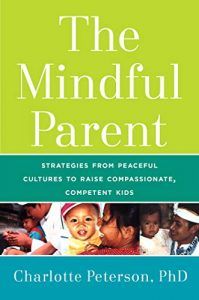 Charlotte Peterson’s book takes a different approach from the other books on this list. The author, a child psychologist, spent years observing parenting strategies in different Eastern cultures and condensed her research into this book aimed at parents in the West.
The point of the book is to teach parents how to organize their lives to best fit their children’s (and their own) needs. Any parent looking for a way to use mindfulness to increase their family’s well-being can find value in this compilation of mindful parenting strategies from around the world.
Available on Amazon.
Better Start Young: The Best Mindfulness Books for Kids

While mindful parenting includes ways for parents to teach mindfulness to their kids, these books cut out the middleman and present mindfulness techniques directly to children in ways they can understand.
These books are suited for children who are interested in mindfulness on their own, as well as for kids whose parents are not sure if they can commit to mindful parenting. Of course, using these books in combination with mindful parenting books is an excellent option as well.
1. Sitting Still Like a Frog: Mindfulness Exercises for Kids (and Their Parents) – Eline Snel
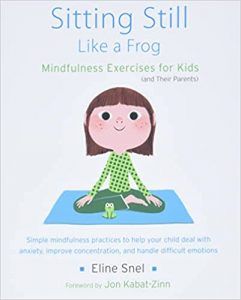 This book is aimed at children from ages 5-12 who struggle with anxiety, emotions, and other challenging aspects of childhood. After explaining the benefits of mindfulness, the book provides 11 mindfulness exercises that children can easily add to their schedules.
The book also includes a CD with guided meditations read by Myla Kabat-Zinn, who, along with her husband Jon (discussed later in the article), is a major figure in mindfulness.
The author has years of experience with mindfulness and mindfulness-based stress reduction (MBSR) in particular, so Sitting Still Like a Frog is an excellent choice for anyone looking to share mindfulness with their children.
Available on Amazon.
2. Mindfulness for Teen Anxiety: A Workbook for Overcoming Anxiety at Home, at School, and Everywhere Else – Christopher Willard
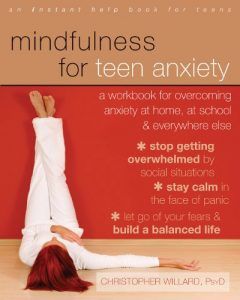 Christopher Willard’s mindfulness book is aimed at teenagers, as indicated by the title. The author, who is a psychologist and learning specialist, shares mindfulness strategies teenagers can use to soothe their anxiety and other social worries in order to enjoy their adolescence.
The book focuses on all the areas of a teenager’s life, from home to school to relationships, so the mindfulness techniques can benefit any teenager dealing with anxiety.
Available on Amazon.
3. Mindful Games: Sharing Mindfulness and Meditation with Children, Teens, and Families – Susan Kaiser Greenland
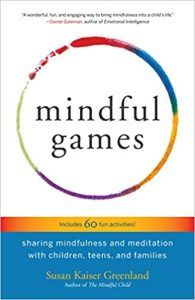 This book from Susan Kaiser Greenland is aimed more directly at children than her mindful parenting book listed above. Greenland has compiled more than 50 games and activities that kids and their families can enjoy on their way to learning and practicing mindfulness.
The book focuses on teaching attention, balance, and compassion, along with concentration skills, so most kids can learn from its teachings. Since this book teaches mindfulness in a fun way, family members might find it a useful tool for sharing mindfulness with each other.
Available on Amazon.
4. Yoga and Mindfulness Practices for Children Card Deck – Jennifer Cohen Harper
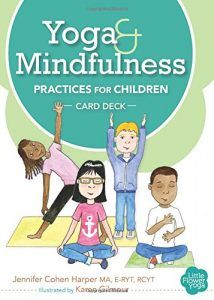 Jennifer Cohen Harper’s card deck also offers 50 ways for children to practice mindfulness. These exercises are split into five categories: connect, breathe, move, focus, and relax. The card deck is illustrated by Karen Gilmour, a children’s yoga teacher, so the pictures are true-to-life.
Clinicians who work with children might find this a helpful tool in their practice. A sample of a few of the book’s cards can be accessed here.
Available on Amazon.
5. Mindfulness Skills for Kids & Teens: A Workbook for Clinicians & Clients with 154 Tools, Techniques, Activities & Worksheets – Debra Burdick
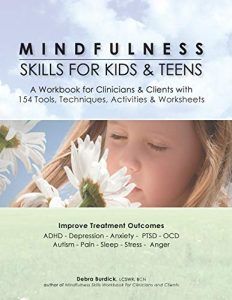 If you want more than 50 techniques, this book triples that number and presents over 150 mindfulness tools for children and adolescents. These tools are meant to explain mindfulness in kid-friendly ways, allowing children to gain their own mindfulness skills and letting children track their mindfulness practices.
Some of the tools are targeted at particular age groups, but because there are so many options available, there is value in this book for children and adolescents of all ages. This book is a versatile option for multi-children households, and it will remain relevant as kids get older.
Available on Amazon.
Mindfulness-Based Cognitive Therapy (MBCT) Books
 Mindfulness-based cognitive therapy (MBCT) is an eight-week program inspired by mindfulness-based stress reduction (MBSR).
MBCT is often a group therapy treatment plan designed for people struggling with major depressive disorder.
Some of the following books might be helpful for clinicians with depressive patients who could benefit from MBCT, while others might be helpful for people suffering from depression.
1. Mindfulness-Based Cognitive Therapy for Dummies – Patrizia Collard
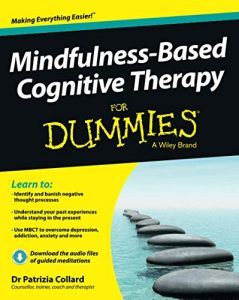 Even if you don’t consider yourself a dummy, therapist Patrizia Collard’s book is an excellent guide to MBCT. Along with introducing the reader to MBCT, the book includes access to downloadable guided meditations you can use when undergoing or administering the eight-week course.
This book is an excellent starting point for learning about MBCT. It can be helpful to show clinicians how an MBCT program might look, as well as to show patients what they should expect before beginning an MBCT program.
Available on Amazon.
2. Mindfulness-Based Cognitive Therapy: Distinctive Features – Rebecca Crane
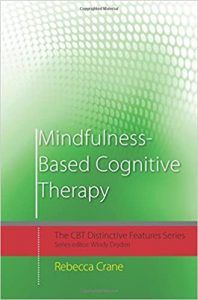 Rebecca Crane’s book is for clinical practitioners who want to learn about MBCT. Crane presents the concept by describing 30 features of the program that define it and set it apart.
It should be noted that the book specifically focuses on MBCT “that is offered in a group context to those who are vulnerable to depressive relapses,” so it is most applicable to that situation.
Still, it can serve as a general overview of MBCT. This book might not be helpful for people dealing with major depressive disorder, as it is mostly intended to train clinicians.
Available on Amazon.
3. Building Competence in Mindfulness-Based Cognitive Therapy: Transcripts and Insights for Working With Stress, Anxiety, Depression, and Other Problems – Richard W. Sears
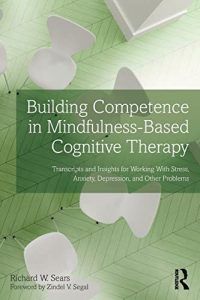 Richard W. Sears’s book aims to serve as an example of a full eight-week MBCT program. It is the next best thing to actually experiencing an MBCT program, and the author shares insights that can help someone administering an MBCT program.
This is a good option for someone who wants to know what an MBCT program actually looks like in practice before administering one on their own.
Available on Amazon.
4. Mindfulness-Based Cognitive Therapy for Anxious Children: A Manual for Treating Childhood Anxiety – Randye J. Semple and Jennifer Lee
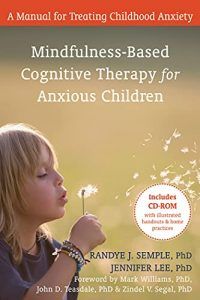 Clinical psychologists Randye J. Semple and Jennifer Lee’s MBCT book is the only one on this list focused on children. It is particularly aimed at 9- to 12-year-olds, so it would be most useful for practitioners dealing with preteens.
The book describes how to treat a child with a 12-session MBCT program and includes supplementary poems and activities to deepen a child’s engagement with the program. This book is the clear choice for anyone interested in MBCT specifically for children.
Available on Amazon.
5. The Mindful Way Workbook: An 8-Week Program to Free Yourself from Depression and Emotional Distress – John D. Teasdale, Mark Williams, Zindel V. Segal, and Jon Kabat-Zinn
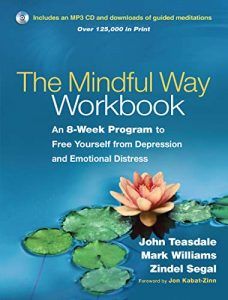 This book is written for people who think they could benefit from MBCT, not just clinicians.
It offers mindfulness practices, guided meditations (which are downloadable to download as well as on an included CD), and a way to track your progress in the mindfulness program. It is a great option for people who wish to learn on their own.
Available on Amazon.
“Mindfulness: Finding Peace in a Frantic World”
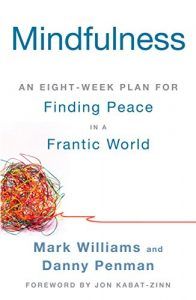 While the previous section highlighted five different books dedicated to MBCT, Mindfulness: An Eight-Week Plan for Finding Peace in a Frantic World by Mark Williams and Danny Penman (2012), merits consideration by itself.
The authors present teachings from MBCT in ways that readers can use to improve their own lives. By dedicating 20 minutes or fewer a day to learning about MBCT, readers who struggle with depression or are otherwise stressed can find techniques to cope.
The foreword of this edition is by Jon Kabat-Zinn, whose work we’ll cover in the next section.
Available on Amazon.
Jon Kabat-Zinn’s Books

Jon Kabat-Zinn studied Buddhism under Thich Nhat Hanh and went on to found the Oasis Center for Mindfulness at the University of Massachusetts Medical School.
Kabat-Zinn is also the creator of mindfulness-based stress reduction (MBSR), an eight-week course that teaches how to manage stress with mindfulness.
He has been a major figure in popularizing mindfulness teachings in the West, and he’s written too many valuable books to pick just one for this list. Mindfulness beginners, as well as experienced practitioners, will likely find value in these offerings.
1. Mindfulness for Beginners: Reclaiming the Present Moment – and Your Life” – Jon Kabat-Zinn
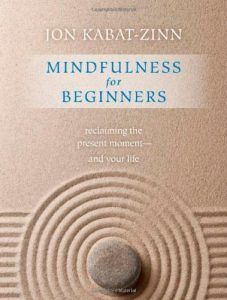 Although this article already had a section on mindfulness books for beginners, Kabat-Zinn’s offering deserves its own mention. This book is meant to be read either all at once or little by little. Reading it is a versatile way to learn about mindfulness from the man who popularized it in the West.
It also includes a CD with guided mindfulness meditation sessions, helpful for people who like having audio cues.
Available on Amazon.
2. Full Catastrophe Living (Revised Edition): Using the Wisdom of Your Body and Mind to Face Stress, Pain, and Illness – Jon Kabat-Zinn
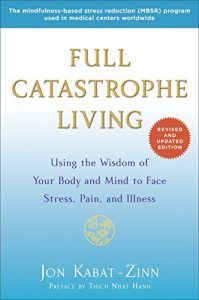 The first edition of this book was first published over two decades ago in 1990, yet still stands tall as a great entry point into the field of mindfulness.
It includes a long overview of mindfulness and the science behind it (with this edition updated to include more recent studies), and it serves as a comprehensive handbook on mindfulness for anyone interested in the field. People who prefer the scientific side of mindfulness might find this to be their favorite book from Kabat-Zinn.
Available on Amazon.
3. Wherever You Go, There You Are – Jon Kabat-Zinn
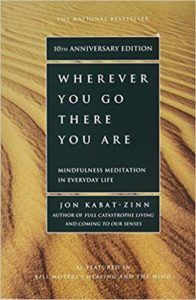 This follow-up to Full Catastrophe Living is a more condensed overview of mindfulness that’s more focused on mindfulness meditation. This makes it a better option for someone who is more interested in the meditation aspect of mindfulness, as well as someone who is looking for a shorter book.
It has been a bestseller for decades meaning countless other people have found it helpful, so you might too.
Available on Amazon.
4. Coming to Our Senses: Healing Ourselves and the World Through Mindfulness – Jon Kabat-Zinn
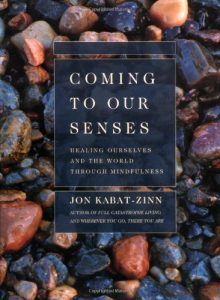 Released well after Wherever You Go, There You Are, this book is an updated overview of mindfulness for anyone interested in its teachings. It is much longer than Wherever You Go, There You Are, and the fact that it was published more recently makes it a good option for someone who wants more up-to-date scientific evidence for mindfulness.
This book focuses on the relationship between our minds and bodies, so people interested in mind-body integration should find it interesting. Of course, it is also a good option for anyone who has read and liked Kabat-Zinn’s other books.
Available on Amazon.
5. Arriving at Your Own Door: 108 Lessons in Mindfulness – Jon Kabat-Zinn
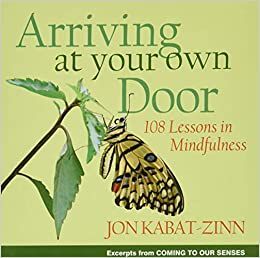 Finally, at 160 pages, Kabat-Zinn’s Arriving at Your Own Door is easily the shortest book of his on this list, making it the clear option for fans of brevity.
Just as it sounds, it is a collection of over 100 mindfulness lessons. As a series of bite-sized reflections, this book can be used as a daily teacher when it comes to mindfulness, for those of us who could use a reminder every now and then to be mindful. It can also be a great way to start learning about Kabat-Zinn’s teachings with minimal commitment.
Available on Amazon.
Freely Available Mindfulness PDFs
 Free PDFs are always an excellent learning tool, as they are accessible to anyone with an internet connection and can be shared very easily.
Here are a few great choices to learn about mindfulness in the cheapest way possible. If you like these books, you can share them with anyone willing to learn.
Mindfulness Meditation for Beginners – Sean Fargo
This free PDF can be a great introduction to mindfulness meditation for a self-motivated learner. It functions as a journal as well as an idea guide—it prompts you to try an exercise then allows you to write down how it made you feel.
It is also a great collection of mindfulness exercises that anyone can use to start practicing. The book can be viewed in-browser or downloaded and shared, making it easy to spread the joy of mindfulness meditation with friends.
Anapanasanti – Mindfulness of Breathing – Buddhadàsa Bhikkhu
The contents of this free ebook were originally delivered as a series of lectures on mindful breathing to a group of monks. It is a good option for those who want their mindfulness teachings to be explicitly based on Buddhism.
Intended to be a manual for mindful breathing, this guide can be an extensive introduction for beginners who do not have access to a teacher of their own.
That is to say, it is not for people looking for a breezy introduction to mindfulness.
The Proactive Twelve Steps: 12 Steps Workbook – Serge Prengel
Finally, Serge Prengel’s workbook is meant to help people use mindfulness in order to recover from addiction. It was inspired by the original 12-step program for alcohol recovery used in Alcoholics Anonymous, though it is retooled to de-emphasize the presence of a higher power for anyone who feels uncomfortable with that idea.
Instead, it is meant to encourage personal growth and transformation from within. People who have undergone a 12-step program may also find value in this as a supplement.
Audiobooks on Mindfulness
 Some of us prefer listening to audiobooks over reading, while others like the convenience of “reading” an audiobook while doing other things, like driving.
Whatever your reasoning, here are five great audiobooks on mindfulness you might enjoy. One of them is so good that we mention it here for the second time.
1. Mindfulness Meditation for Pain Relief: Guided Practices for Reclaiming Your Body and Your Life – Jon Kabat-Zinn
 Kabat-Zinn is so highly regarded in the mindfulness community that we felt it necessary to dedicate a section to him above. We also felt that he deserves to be the first author mentioned in this section.
In this audiobook, Kabat-Zinn explains mindfulness meditation and leads guided meditation sessions, so this is a good option for someone looking for both. Since the meditations are specifically geared toward pain relief, this audiobook is a great option for someone who is in pain and finds sitting down to read uncomfortable.
2. The Art of Meditation – Daniel Goleman
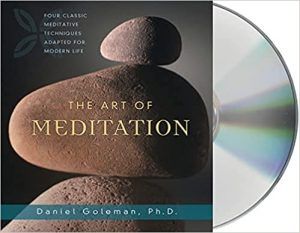 This audiobook CD has a simple goal that it executes well: presenting four different guided meditation sessions you can follow and practice with. This audiobook includes a body scan meditation, a walking meditation, a breathing meditation, and finally a general mindfulness meditation.
This audiobook is especially useful for people seeking mindfulness for several different reasons, and listeners might even find a benefit from mindfulness that they didn’t know they needed.
3. Mindfulness: An Eight-Week Plan for Finding Peace in a Frantic World – Mark Williams & Danny Penman
 The audiobook version of this book, which we already included in another section of this list, can be helpful for people who find it hard to follow a program while reading and prefer to listen instead.
This audiobook will walk you through the entire eight-week program. You can even put it on your phone or MP3 player and have a full mindfulness program available to you at all times.
4. Mindful Birthing: Training the Mind, Body, and Heart for Childbirth and Beyond – Nancy Bardacke
 As the title suggests, this audiobook has a rather limited focus: It’s targeted to expecting families who want to use mindfulness to ease their pregnancy as well as the birthing process.
This audiobook uses mindfulness to ease an expecting family’s fears going into childbirth and should help to reduce stress at every step.
It is written by a nurse, midwife, and mindfulness teacher with lots of experience relevant to mindful birthing.
5. Joyful Wisdom – Yongey Mingyur Rinpoche
 For those who want mindfulness that is based in Buddhism, Joyful Wisdom is the way to go. In it, the author explains how to deal with anxiety in the modern world. It is not an audiobook of guided meditation sessions, but one to be listened to as a lesson and as a story.
This audiobook will give any practitioner of mindfulness and Buddhism plenty to think about long after finishing it, as the author is a respected meditation master.
Top 17 Exercises for Mindfulness & Meditation
Use these 17 Mindfulness & Meditation Exercises [PDF] to help others build life-changing habits and enhance their wellbeing with the physical and psychological benefits of mindfulness.
Created by Experts. 100% Science-based.
A Take-Home Message
Although we have listed many of our favorites above, there are countless books out there that can help you learn about and practice mindfulness. Whatever your learning style or experience level, and whatever you need mindfulness for in your life, we hope this page has a book for you. Even better, we hope it has several.
Do you have a favorite mindfulness book not included on this list? What do you think of our selections? Let us know in the comment section.
We hope you enjoyed reading this article. Don’t forget to download our three Mindfulness Exercises for free.

Let us know your thoughts
Related articles



Read other articles by their category
- Body & Brain (49)
- Coaching & Application (57)
- Compassion (26)
- Counseling (51)
- Emotional Intelligence (24)
- Gratitude (18)
- Grief & Bereavement (21)
- Happiness & SWB (40)
- Meaning & Values (26)
- Meditation (20)
- Mindfulness (45)
- Motivation & Goals (45)
- Optimism & Mindset (34)
- Positive CBT (29)
- Positive Communication (20)
- Positive Education (47)
- Positive Emotions (32)
- Positive Leadership (18)
- Positive Parenting (4)
- Positive Psychology (33)
- Positive Workplace (37)
- Productivity (17)
- Relationships (46)
- Resilience & Coping (36)
- Self Awareness (21)
- Self Esteem (38)
- Strengths & Virtues (32)
- Stress & Burnout Prevention (34)
- Theory & Books (46)
- Therapy Exercises (37)
- Types of Therapy (64)
What our readers think
Loved your posts and quotes. I start my day with 5 minutes reading on your website. It really helps me to stay mindful through out the day.
Came across the book during my travel to India few months ago. its titled as “3 Consciousness ” by Kazim Merchant. I recommend reading it.
Have a mindful day
In this comprehensive list. I will add one title. 2007 publication, which kind of covered scientific evidence of mindfulness n observed gaps in knowledge too. Book is by Daniel Goleman n ..
Url is
https://www.amazon.com/Altered-Traits-Science-Reveals-Meditation/dp/0399184384
I think it is must read for inquisitive mind.
thank you for sharing
Oh what a nice n comprehensive list. Thanks for putting this together,
I thought of preparing such list, as I just started to dig into theoritical n philosophical aspects of it. But here I got everything together. Jon kabat-zinn is what anyone will start reading n you have covered it as seperate heading. Thanks again once again
Whats about the best Book about the Now from Eckhart tolle? The best one is missing!
This is a very good publication about mindfulness meditation that used for prolongation the human’s life as was discovered by Allen Omton and Serge Dobrow.
Very nicely done, Joaquín! I’m particularly impressed by your breaking out mindfulness into an apt taxonomy of subsets – and personally annotating each listing. Exactly my kind of map!
” If you have a favorite mindfulness book that you think should be on this list, let us know! ”
Well, if you’re still there (a year later), yes! I do. Two selections.
1) It’s been 40 years since Thich Nhat Hanh published The Miracle of Mindfulness. Today, I’d recommend his Essential Mindfulness series – How To Sit, How To Walk, How To Eat, How To Love, How To Fight, etc. I’m very glad to see it’s reaching a wide audience.
And stepping back and looking at your list, the time seems ripe to consolidate gains and best practices, as a base from which to extend mindfulness into conscious conduct, and nondual wisdom. So for five years’ I’ve been writing “Pause … Breathe … Smile ~ Awakening Mindfulness When Meditation Is Not Enough.” The title is not only an easy meditation anyone can practice anytime. It’s also the structure of the book, which introduces intentionality and philosophy to meditation as an integral whole. Pausing, intention. Breathing, meditation. Smiling, wisdom.
It’s due September 1st from Sounds True. If you might wish to consider reviewing it somewhere, I’d be more than glad to have them send you a complimentary copy.
For more info:
http://GaryGach.com &
http://GaryGach.com/books/pause-breathe-smile
Thanking you, Joaquín
with a bow
& a smile
Gary
Thanks for this excellent list, I would add Sit like a Buddha and The Buddha walks into a Bar. Both are unlike most other mindfulness books I’ve read.
New book: “Don’t Wake Up! It Will Ruin Everything” will be FREE on Amazon as an e-book, November 17, 18, 19.
From “Don’t Wake Up!” print edition / back cover:
Are you brave enough to really want to wake up?
There are great books on how to meditate, great books on why we should meditate, BUT not so many on why we don’t meditate.
Why is it so challenging to achieve a daily practice?
Why don’t our practices bear fruit?
Don’t Wake Up! It Will Ruin Everything offers a gentle alarm bell, penetrating our sleep with humor and reminding us of the possibility and cost of awakening. Don’t Wake Up! offers a humorous, mildly ironic look at several attitudes that get in the way of practicing mindfulness. Taking advantage of the power of paradox, looking at why waking up is dangerous actually strengthens our midfulness practice.
Wow, Joaquin, you did a lot of research and really appreciating your focus. Thanks!!
Thank you Joaquin! Just did a google search for my book and stumbled across this. Appreciate the should out for #RealWorldMindfulness for Beginners. Have a blessed day