Top 12 Apps For Meditation and Mindfulness (+ Reviews)
 As smartphones become more and more ubiquitous in today’s world, questions arise as to how they affect mindfulness.
It’s clear that used compulsively or constantly, smartphones can be enemy of mindfulness, however, that’s not our only option. Rather than treating the usage of smartphones and mindfulness as oxymorons, we should consider ways to use our smartphones as a tool to aid our mindfulness practices.
That’s right, we can actually use our smartphones to learn about mindfulness and even enhance our practice, as long as we are thoughtful about how we use our smartphones.
You could download your own favorite meditation sessions, set up some music or ambient noise tracks, and create reminders and notifications to get you into regular practice–or, you could simply use one of the many helpful meditation and mindfulness apps that are available.
Here are the top mindfulness apps for mindfulness and meditation.
Before you read on, we thought you might like to download our three Mindfulness Exercises for free. These science-based, comprehensive exercises will not only help you cultivate a sense of inner peace throughout your daily life but will also give you the tools to enhance the mindfulness of your clients, students, or employees.
This Article Contains:
Daily Mindfulness Apps
These apps will help you establish a daily mindfulness practice if you have no idea where to begin. Establishing a daily practice is a good way to build a mindfulness habit, and before long practicing mindfulness will come naturally.
Whether you have an iPhone or Android phone, and whether you’re looking to spend some money or none at all, these apps should help you.
The Mindfulness App
The Mindfulness App is a good app for beginners, so we’ll start here. It is an iOS app designed to train you in mindfulness.
You will start with a five-day introduction to mindfulness along with guided meditations to get you familiar with meditating. It also offers timed sessions (both guided and silent meditations) that are anywhere from 3 to 30 minutes and the ability to customize your meditations.
If you don’t mind reaching into your pocket for more content, the app also offers a premium subscription that includes access to courses on relationships, focus, calmness, and 250+ guided meditations.
This app is a popular one, with a 4.7 rating based on over 2,200 reviews on Apple’s app store.
Headspace
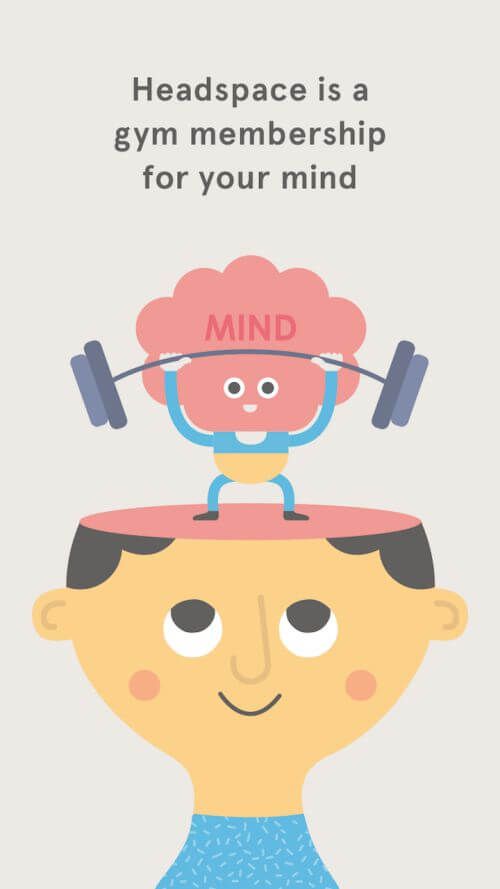 The Headspace app is an iOS and Android app that includes hundreds of themed meditation sessions designed to help you destress, rid yourself of anxiety, improve your focus, and even get to sleep (or get back to sleep) quicker which guides you through daily meditation 10 minutes at a time.
Headspace aims to be your mindfulness “personal trainer” in helping you establish a daily meditation practice.
It is arguably the most popular meditation app, with a 4.9 rating in the app store based on over 600,000 reviews. It is also backed by several scientific studies, making this app a good bet.
Headspace offers some of their basic content for free, as well as offering a free trial; however, after the first two weeks, you will automatically be enrolled in the annual plan. You also have the option to pay on a monthly basis if the year plan is too big of a commitment for you, although you only get one free week with that plan.
While the fact that you eventually have to pay for a subscription might turn some people off, you have nothing to lose by trying it for free.
Using the headspace app – Headspace
Calm
 Calm is a free iOS and Android app that offers guided mindfulness meditation and touts itself as “the #1 app for meditation and sleep.” It’s free to download, although the free content is limited. The app initially offers a “7 Days of Calm” course which introduces you to mindfulness meditation, as well as some guided and unguided meditation sessions.
You can subscribe to Calm to unlock all the content (more multi-day courses, a “Daily Calm” course, and many, many more guided meditations) for either a monthly, annual, or lifetime subscription. Calm is a good solution for people who want multi-day courses they can follow rather than less-organized individual sessions.
Calm is another good option with tons of positive reviews; over 700,000 reviewers have given it an average rating of 4.8.
Smiling Mind
The Smiling Mind app is a good choice if you have young kids or students you want to introduce to meditation. This app is available on the App Store and on Google Play and is completely free to use, which is rare to find in any app these days! It was also designed by psychologists and educators to work well for people of all ages.
Choose from any of their many programs, including programs for 7 – 9-year-olds, 10 – 12-year-olds, 13 – 15-year-olds, 16 – 18-year-olds, adults, those in sports, mindfulness in the classroom, mindfulness in the workplace, and a sleep program.
This app is one of the most popular apps in Australia and it has a 4.3 rating on the App store.
10% Happier: Meditation
Do you want to be 10% happier? That’s what this app claims it can offer you! This free-to-download app provides over 500 guided meditations on a variety of topics, quick meditations to fit into a busy schedule, and “bite-size stories, wisdom, and inspiration” that you can use to stay mindful, happy, and healthy throughout the day.
This app will teach you the basics, offer meditations to help you sleep, and allow you to track your progress as you build meditation into a daily habit. You can also get personal coaching, offline listening, and the meditation of the day, along with practical tidbits about meditation. You can access the basics of meditation and get daily reminders for free, but you’ll need to upgrade to membership to get all the content this app has to offer.
10% Happier is a well-reviewed app, with an average rating of 4.8 from over 55,000 users on the App store.
Simply Being Guided Meditation
 Simply Being Guided Meditation is an iOS and Android app from the people who made the Meditation Oasis podcast. It is very affordable and offers a customizable guided meditation experience.
You can either set it for 5, 10, 15, 20, or 30 minutes, and then you can choose to meditate either with nature sounds, with music, or with both.
This app is a good option for people who want guidance to start meditating, and users can customize it to fit their meditation practice once they have figured out the basics. While it is an excellent app, some may be unwilling to buy an app without first trying it for free.
This app is not as popular as the others, but it has a solid 4.7 rating on both the App Store and Google Play.
Take A Break!
Take A Break! is another iOS and Android app from the Meditation Oasis podcast. It is very similar to the Simply Being app but offers two more guided meditations featured on the podcast. People who are curious about the Simply Being app but are apprehensive about paying should give Take A Break! a try first, since this one is free.
This also means that Take A Break! is a great free alternative to the Simply Being app for people who want to try out the Meditation Oasis podcast’s apps without spending any money, however, it’s also less popular and has a slightly lower rating than most of our other recommended apps (about 4.5).
Omvana
Omvana is an iOS app that provides over 50 guided meditation tracks plus sleep sounds. It can be downloaded for free and includes several tracks that are completely free, while others can be bought.
These meditation tracks can range from simple meditation music to fully-guided meditation tracks. You can even customize your meditations with any of their over 200 ambient tracks. Omvana is a good solution for people who are not sure if they want to spend money on a meditation app, as several different tracks can be sampled for free.
Omvana isn’t as well-known as the other apps on our list but it’s got a 4.5 rating on the App Store and was chosen as one of Healthline’s best meditation apps in 2019.
Welzen
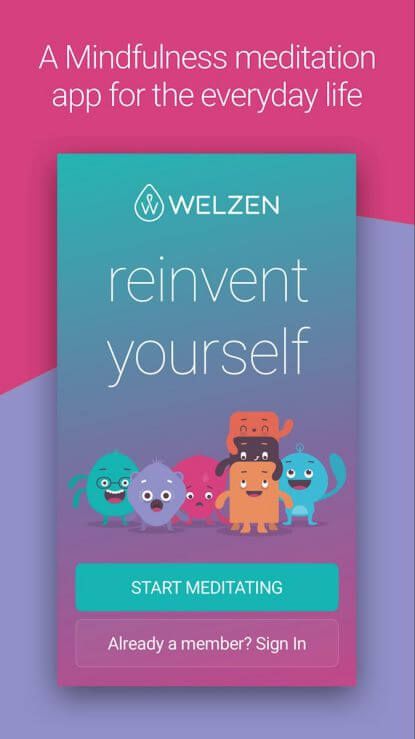 Welzen is a free iOS and Android app which covers several aspects of mindfulness meditation, beginning with a 5-day training course. After that, the app offers guided meditation programs as well as individual guided mindfulness meditation sessions.
Users can choose from several 5, 10, 15, and 20-minute single meditation sessions or choose a meditation series to practice. They even offer a meditation for kids option which has guided meditation sessions specifically for kids.
“Premium” meditations can be accessed with a subscription for premium access. While the subscription costs might look steep to some, there are several free aspects of the app that can be sampled before having to spend a dime.
Mindfulness Coach

Mindfulness Coach is an iOS app that was designed by the United States Department of Veteran’s Affairs to help teach mindfulness to service members and veterans.
The app is free and offers mindfulness training as well as opportunities to practice mindfulness and track your progress in practicing mindfulness. Mindfulness Coach appears to be mostly aimed at teaching mindfulness for the purposes of:
“reducing stress, improving emotional balance, increasing self-awareness, helping with anxiety and depression, and coping more effectively with chronic pain.”
It is intended to be used by soldiers and veterans, though others might find it helpful as a way to learn mindfulness.
With a 4.7 rating and nearly 2,000 reviews, it seems that this app is a good choice for its target audience. These detailed, science-based exercises will help you or your clients enjoy the benefits of mindfulness and create positive shifts in their mental, physical, and emotional health.
Download 3 Free Mindfulness Exercises (PDF)
Mindfulness Aid Apps
These apps can serve as aids for people who already know how to practice mindfulness and meditation but are looking for apps that can enhance their practice rather than offer guided sessions or training.
Features of these apps include reminders, timers, and musical tracks for people to practice mindfulness meditation with. If you feel like you have a pretty good handle on mindfulness, these apps might take your practice to the next level.
Better Sleep
Better Sleep is an iOS and Android app that provides background music for you to practice mindfulness meditation on your own. There are no guided meditations, as the app only provides backing tracks.
Recently the app underwent a remodel, and focus on providing background tracks to improve sleep. Expansions include sleep for work tracks.
It is completely free, though, it a good choice for people who already know how to meditate but are looking for something to accompany their mindfulness meditation sessions. It may also be useful for any mindfulness practitioners who are more musically-inclined.
If you’re looking for an app for advanced meditators, look no further; it boasts a solid 4.8 rating based on over 400,000 reviews on the App store.
Insight Timer
 Insight Timer is a free iOS and Android app which aims to aid mindfulness meditators by letting them set their session time and be notified once the time is up.
Like Relax Melodies, it is mostly aimed at more experienced meditators; however, the Insight Timer app also offers some guided meditation sessions, music tracks and ambient sounds, and tools to share your progress.
Meditators might prefer it to a regular timer, as you can choose an alarm sound that will gently let you know that time is up rather than notifying you with a more traditional jarring alarm sound. Apparently people love those gentle notifications, as this app has a 4.9 rating based on nearly 200,000 reviews.
Top 17 Exercises for Mindfulness & Meditation
Use these 17 Mindfulness & Meditation Exercises [PDF] to help others build life-changing habits and enhance their wellbeing with the physical and psychological benefits of mindfulness.
Created by Experts. 100% Science-based.
A Take-Home Message
If you are dedicated to mindfulness, your smartphone does not have to be an impediment to your practice. As we have explored above, there are a variety of apps that can teach you mindfulness if you are unfamiliar with it or, help you practice mindfulness if you do not have a regular, consistent practice already.
If you are intentional about your smartphone usage, you might find that–contrary to popular belief–your smartphone can be a helpful mindfulness tool after all.
What are the ways you believe smartphones can help us in our mindfulness practices? What app is your favorite? Please let us know in the comments below!
We hope you found this article useful. Don’t forget to download our three Mindfulness Exercises for free.

Let us know your thoughts
Related articles



Read other articles by their category
- Body & Brain (49)
- Coaching & Application (57)
- Compassion (26)
- Counseling (51)
- Emotional Intelligence (24)
- Gratitude (18)
- Grief & Bereavement (21)
- Happiness & SWB (40)
- Meaning & Values (26)
- Meditation (20)
- Mindfulness (45)
- Motivation & Goals (45)
- Optimism & Mindset (34)
- Positive CBT (29)
- Positive Communication (20)
- Positive Education (47)
- Positive Emotions (32)
- Positive Leadership (18)
- Positive Parenting (4)
- Positive Psychology (33)
- Positive Workplace (37)
- Productivity (17)
- Relationships (46)
- Resilience & Coping (36)
- Self Awareness (21)
- Self Esteem (38)
- Strengths & Virtues (32)
- Stress & Burnout Prevention (34)
- Theory & Books (46)
- Therapy Exercises (37)
- Types of Therapy (64)
What our readers think
Mindfulness apps are a great way to help you stay present and aware throughout your day. They have listed the best mindfulness apps here, all of which come with great reviews!
I would add an Exhale to this. Really grea app. Also I can recommend a great guide for the beginners – net-bossorg/mindfulness-by-julia-hanner – worked for me very well.
Thanks for this amazing read Courtney, Really interesting article. I have been using a mindfulness app recently called Ripple Meditation I downloaded on the app store. I have noticed such a difference in my mood day to day. Definitely recommend
https://ripplemeditation.com/
Thank you for sharing these Apps. I will try recommending some to my students.
Music is important to high school students and can certainly be used as a calming force depending on what type of music is used. Introducing new types of music or melodies to them will hopefully open their minds and allow some new thoughts on how to be more calm during their lives.
Great information detailing each available app. I would use the Calm and Relax Melodies app because I work with behavior students. I already listen to calming music and workout to de-stress which I find very helpful to myself and to help my students to learn how to calm down when upset. I also attend training, read behavior articles and material on how to help my students. Again, these are some great apps that I may invest in.
I already am in a class where calm is being used. The students love it and ask to do calm each day.
It is a nice way to center my day and to clear my mind. Myself and the teacher that I work with are definite fans of calm.
Hi,
I think mindfulness can’t be achieved by meditation don once or twice a week. It can be only achieved if you are able to meditate regularly i.e. form a habit of meditation . And I don’t think the above mentioned apps help you in habit formation. I recently started using this app called Atom. Through it’s algorithm, it can form adaptive meditation sessions for you. Not just that, they use trigger habits which really help in habit formation. You should try it and feature it as well if you find it useful.
Here is the link: https://bit.ly/atom_playstore
Thanks
Hi, Great article listed in details all the important points related to smartphone and I personally using app calm and found is relaxing some time especially the sound of water striking on stones I will try others apps you mention here. I am working in 9 to 5 office routine and really looking for something that gives me relaxation and inner piece life get very hectic sometimes and these sort of activities really good for your health and work-life I have been reading a lot related to this and I found this article is interested as we nowadays excess used of smartphone and these are some apps to make your self feel calm and relax.
“Hi, in my opinion Mindfulness means maintaining a moment-by-moment awareness of our thoughts, feelings, bodily sensations, and surrounding environment.
Mindfulness also involves acceptance, meaning that we pay attention to our thoughts and feelings without judging them—without believing, for instance, that there’s a “right” or “wrong” way to think or feel in a given moment.