Textbooks on Motivation
Here are a suggested book references for tertiary-level study of motivation for those who want to dive deeper into some of these topics:
1. Understanding Motivation and Emotion – Johnmarshall Reeve
 This book delves into the roots of motivation, the emotional processes at work, and the impacts on learning, performance, and wellbeing.
IT provides a toolbox of practical interventions and approaches for use in a wide variety of settings.
Available on Amazon.
2. Motivation: Theories and Principles – Robert C. Beck
 This experimentally oriented book provides a critical examination of research and theory with a topical approach.
It covers a broad range of motivational concepts from both human and animal theory and research, with an emphasis on the biological bases of motivation.
Available on Amazon.
3. Motivation – Lambert Deckers
 This textbook provides a complete overview of motivation and emotion, using an overarching organizational scheme of how biological, psychological, and environmental sources become motivation.
How motivation is the inducement of behavior, feelings, and cognition.
Available on Amazon.
4. Motivation and Emotion Evolutionary Physiological, Developmental, and Social Perspectives – Denys A. deCatanzaro
 Within each topically organized chapter, which all begins with a concise overview statement and ends with a personal summary, the author highlights material of special importance and concludes major sections with a summary.
Available on Amazon.
5. Motivation: A Biosocial and Cognitive Integration of Motivation and Emotion – Eva Dreikurs Ferguson
 A wide range of topics concerning motivation and emotion are considered.
These include hunger and thirst, circadian and other biological rhythms, fear and anxiety, anger and aggression, achievement, attachment, and love.
Available on Amazon.
6. Human Motivation – Robert E. Franken
 Exploration of day-to-day human motivation, Franken provides a topical organization that shows students how biology, learning, and cognition interact with individual differences to produce human behavior.
Available on Amazon.
7. The Psychology of Action: Linking Cognition and Motivation to Behavior – Peter M. Gollwitzer and John Bargh
 Renowned social and motivational psychologists present concise formulations of the latest research programs.
These programs are effectively mapping the territory, providing new findings, and suggesting innovative strategies for future research.
Available on Amazon.
8. Motivation and Self-Regulation Across the Life Span – Jutta Heckhausen and Carol S. Dweck
 Critical elements of motivational systems can be specified and their interrelations understood by charting the origins and the developmental course of motivational processes.
Available on Amazon.
9. Reclaiming Cognition: The Primacy of Action, Intention, and Emotion (Journal of Consciousness Studies) – Rafael Nunez and Walter J. Freeman
 Traditional cognitive science is Cartesian in the sense that it takes as fundamental the distinction between the mental and the physical, the mind and the world.
This leads to the claim that cognition is representational and best explained using models derived from AI and computational theory. The authors depart radically from this model.
Available on Amazon.
10. Motivation: Theory, Research, and Applications – Herbert L. Petri and John M. Govern
 Reflects the latest developments from the field in its thorough coverage of the biological, behavioral, and cognitive explanations for human motivation.
The book clearly presents the advantages and drawbacks to each of these explanations, allowing readers to draw their own conclusions.
Available on Amazon.
11. Intrinsic & Extrinsic Motivation: The Search for Optimal Motivation and Performance – Carol Sansone and Judith M. Harackiewicz
 This book provides a summary view of what research has determined about both extrinsic and intrinsic motivation, and clarifies what questions remain unanswered.
Available on Amazon.
12. The Psychobiology of Human Motivation (Psychology Focus) – Hugh Wagner
 The Psychobiology of Human Motivation explores what directs our behavior.
It starts from basic physiological needs like hunger and thirst, to more complex aspects of social behavior like altruism.
Available on Amazon.
Resources From PositivePsychology.com
Looking to learn and apply the science of motivation? We have many resources throughout our blog that can support you.
First, take a look at the following further reading throughout our blog:
- What Is Bandura’s Social Learning Theory? 3 Examples
Bandura’s social learning theory shows how observing others and the rewards they receive shapes our motivation. In this article, you’ll get a clear tour of the theory, plus real-world examples for teaching, parenting, and therapy.
- Self Determination Theory and How It Explains Motivation
Self-determination theory roots motivation in three basic needs—autonomy, competence, and relatedness. This overview shows how supporting these needs transforms compliance into genuine engagement across school, work, and health.
- Social Identity Theory: I, You, Us & We. Why Groups Matter
Social identity theory explains how motivation is shaped by our drive to belong to valued groups and protect a positive social self. In this article, we explore why inclusive group climates can unlock motivation and why threatened identities can derail it.
- Internal vs External Locus of Control: 7 Examples & Theories
This article explores how our beliefs about “who is in charge”—ourselves or outside forces—shape motivation, effort, and persistence. In it, we unpack the locus of control theory, discuss research findings, and point you toward our favorite books and worksheets on the topic.
- Self-Fulfilling Prophecy in Psychology (Incl. Examples +PDF)
Self-fulfilling prophecies can have significant yet unconscious effects on our motivation. In this article, we explore a clear definition of the concept, classic findings, real-life examples, and practical ways to challenge limiting expectations.
- Social Comparison Theory & 12 Real-Life Examples
Social comparison theory explains how we evaluate ourselves against others in ways that can either motivate growth or erode self-esteem. In this article, we break down the theory, explore real-life examples, and offer practical advice for making growth-focused comparisons.
For some free motivation resources, be sure to check out the following worksheets:
- Building New Habits
In this worksheet, you’ll prepare to set a new, positive habit using a three-step process involving cues, behaviors, and rewards.
- Why You Do What You Do
This worksheet guides you through exploring your motivations and underlying emotions in a situation where you acted unpredictably to help increase self-knowledge.
- “If-Then” Worksheet
Here, you’ll be guided through developing an “if-then” plan to support you in delaying gratification in pursuit of a goal.
More extensive versions of the following tools are available with a subscription to the Positive Psychology Toolkit©, but they are described briefly below:
- Chasing Happiness
Many people chase future happiness at the cost of appreciating what they already have or precious moments along their life journey that brought them deeper happiness.
We must recognize and cherish those moments and how they transform our life experiences.
-
- Step one – Think about the moments in the past that made you happy. Were you finally happy when you achieved these moments?
- Step two – Now reflect on events of the past that contributed significantly to your happiness. Write down the events that come to your mind.
- Step three – What kind of conclusions can you draw about the authentic sources of your happiness?
- Boosting Motivation by Celebrating Micro-Successes
Celebrating small wins can enhance our clients’ life experiences while boosting motivation for future tasks and goals.
- Step one – Write down the micro-successes you experience each day, no matter how small or insignificant they may seem, in a celebration journal.
Use the following prompts to help:
What have you achieved today, no matter how small?
What did you achieve today that signified a potential breakthrough?
What did you achieve today that has motivated you to do more?
What small steps did you take today that you can celebrate?
-
- Step two – Celebrate each of the small achievements. It doesn’t need to be anything big and should be proportionate to the win.
Perhaps take a moment to reflect on what you have achieved and why it matters, send a well-done email to yourself, or share the success with others who support you.
If you’re looking for more science-based ways to help others reach their goals, check out this collection of 17 validated motivation & goal achievement tools for practitioners. Use them to help others turn their dreams into reality by applying the latest science-based behavioral change techniques.
A Take-Home Message
There is no shortage of explanations for what constitutes human motivation, and the research on the topic is as vast and dense as the field of psychology itself. Perhaps the best course of action is to identify the motivational dilemma we’re trying to solve and then select one approach to motivation if only to try it out.
By annihilating desires you annihilate the mind. Every man without passions has within him no principle of action, nor motive to act.
Claude Adrien Helvetius, 1715–1771
As Dan Kahneman argues, teaching psychology is mostly a waste of time unless we as students can experience what we are trying to learn or teach about human nature and can deduce if it is right for us.
Then and only then, can we choose to act on it, move in the direction of change, or make a choice to remain the same. It’s all about experiential learning and connecting the knowledge we acquire to our own experience.
What motivational theory do you find most useful?
We hope you enjoyed reading this article. Don’t forget to download our five positive psychology tools for free.



 To describe the indescribable seems to be the ambitious undertaking of motivation theories.
 Theories of motivation are often separated into content theories and process theories.
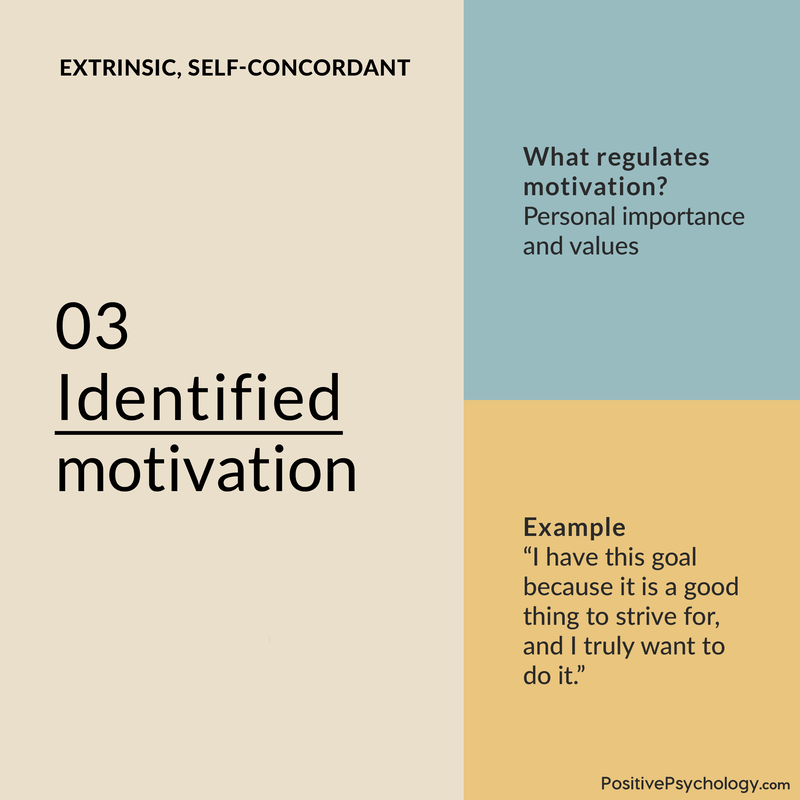
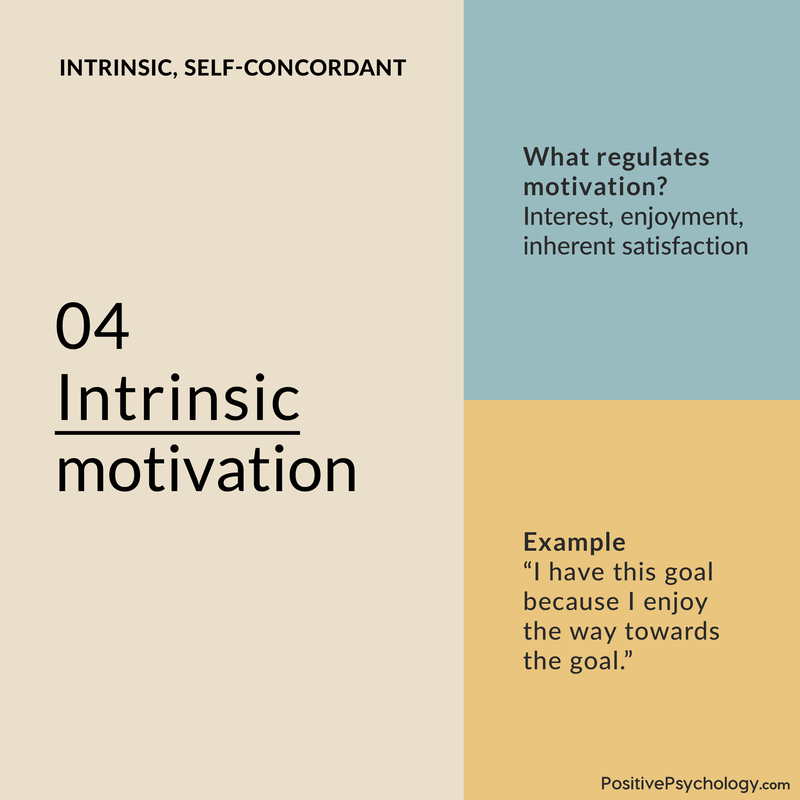

 Some cognitive theories inform our understanding of motivation.
 In response to this theory, a third theory, Theory Z, was developed by Dr. William Ouchi. Ouchi’s theory focuses on increasing employee loyalty to the company by providing a job for life and focusing on the employee’s well-being. It encourages group work and social interaction to motivate employees in the workplace.