Somatic Experiencing Therapy: 10 Best Exercises & Examples
 While events like natural disasters, wars, or accidents can be considered traumatic by most people, other events may be traumatic due to people’s subjective experience.
Experiencing a traumatic event can have either a transitory or an ongoing impact on psychological and physical states. Some people can easily overcome the impact of such an event, while others can be deeply affected in their ability to cope with the same situation.
This can negatively affect how they perceive their environment and themselves. The brain gets rewired to maladaptive physical and mental responses, and the body gets stuck in a constant stress response.
Somatic experiencing, which is a somatic therapy, can effectively heal people from trauma by using bodily interventions.
Before you continue, we thought you might like to download these three free Positive Psychology exercises. These science-based exercises explore fundamental aspects of positive psychology, including strengths, values, and self-compassion, and will give you the tools to enhance the wellbeing of your clients, students, or employees.
This Article Contains:
- What Are Somatic Healing Therapies?
- Somatic Experiencing Explained
- Is Somatic Experiencing Evidence-Based?
- 15 Benefits of Somatic Experiencing
- 3 Criticisms of Somatic Experiencing
- How Does It Work? 2 Real-Life Examples
- 8 Therapeutic Techniques for Your Practice
- 5 Books on the Topic
- Relevant PositivePsychology.com Tools
- A Take-Home Message
- References
What Are Somatic Healing Therapies?
The term somatic comes from the Greek word soma, which means “body.” Somatic healing therapies fall within the spectrum of mind–body therapies, and they specifically refer to those therapies that work with a bottom-up approach (Barrat, 2010; Muehsam et al., 2017).
Because of this, somatic healing therapies are also called body–mind therapies and represent the application of somatic psychology, which is the field concerned with the living experience of being embodied and acknowledging this experience as the basis of how we relate to and live in the world (Barrat, 2010).
Body–mind therapies use healing interventions that work with the body to access and change feelings, thoughts, and behaviors. These interventions work with the body’s wisdom and leverage personal resources from each client (Barrat, 2010; Levine & Frederick, 1997).
Somatic Experiencing Explained
 Developed by Peter Levine, Somatic Experiencing (SE®) is a body–mind therapy specifically focused on healing trauma by helping clients draw their attention to their bodies.
The sensations and experiences explored are described as:
- Interoceptive (i.e., internal awareness of the body)
- Proprioceptive (i.e., spatial orientation of the body)
- Kinesthetic (i.e., movements of the body; Payne, Levine, & Crane-Godreau, 2015).
Unlike other forms of trauma therapy, SE® intentionally avoids directly evoking traumatic memories and, therefore, does not focus on thoughts and feelings related to the traumatic experience.
SE® approaches these memories using the body as a gateway, exploring them gradually and indirectly by promoting more adequate, safer, and comfortable bodily experiences (Payne et al., 2015).
Understanding stress, trauma, and PTSD in SE®
Within SE®, stress is defined as “the inability of the complex and dynamical autonomous nervous system to recover to normal functionality” (Payne et al., 2015, p. 3), and trauma, as the constant dysregulation of the nervous system and bodily experiences (Levine & Frederick, 1997).
This means that trauma resides in the body and not in the nature of the event, and that people will vary greatly in their ways of perceiving and responding to the event, depending on biological, psychosocial, and contextual variables.
The autonomous nervous system is dynamic and can respond paradoxically when facing stress, simultaneously activating the sympathetic and parasympathetic systems (Payne et al., 2015).
Levine (1986) posits that the body can get stuck in an overwhelmed and dysfunctional response, which is reversible, though not modifiable by the external event.
This approach to stress and trauma posits that instead of using diagnostic and pathologizing categories such as post-traumatic stress disorder (PTSD), a stress continuum should be used to assess the level of activation of both the sympathetic and parasympathetic systems. Furthermore, SE® considers trauma as an interrupted natural and non-pathological response that needs to be brought to closure (Levine & Frederick, 1997).
When facing a threat, all animals – including humans – are evolutionarily wired to unconsciously and automatically respond with certain somatic behaviors to protect themselves, including fleeing, bracing, stiffening, and collapsing.
The main difference between wild animals and humans is that animals naturally recover from these states by engaging in other action patterns such as yawning, trembling, and shaking to release the excess of energy generated by the threatening experience (Levine & Frederick, 1997).
However, humans have learned to hinder these counter-responses due to several circumstances, thwarting the natural response of resetting the nervous system. This interruption leads to the nervous system’s dysregulation, leaving a memory in the body with glimpses of the traumatic experience.
According to Payne et al. (2015, p.14), “trauma is a highly activated incomplete biological response to a threat, frozen in time.” From this standpoint, people experiencing trauma do not suffer from a disease, but rather their bodies have been caught up in a dysregulated state. And that is exactly what SE® addresses.
This video by Bessel van der Kolk on Understanding Trauma explains more:
Understanding theoretical underpinnings of SE®
A central feature of SE® is developing conscious internal awareness or interoception, which is common in Eastern disciplines such as tai chi, qigong, yoga, and seated meditation (Schmalzl, Crane-Godreau, & Payne, 2014).
Research on interoception suggests that this sense of the body’s internal state relates to the sense of self and cognitive and decision-making processes, which are affected by trauma (Craig, 2010; Damasio, 2003).
Levine and colleagues propose that SE® can restore interoceptive and premotor cortices in the brain to bring them to an optimal functioning level. This therapy aims to improve the operation of the deep regulatory processes of four subcortical structures within the nervous system.
These subcortical structures are named the core response network and include the autonomic nervous system, limbic system, emotional motor system, and reticular arousal system. Research shows that these systems are intricately interconnected, operating at a nonverbal level (Payne et al., 2015).
Furthermore, they propose that another set of cortical brain structures mediate responses between cognitive processes (verbal) and the core response network (nonverbal). They suggest that premotor and interoceptive cortices play a key role in SE® for bringing the nervous system back to optimal functioning, modulating the nervous system’s dysregulation.
Therefore, while SE® focuses on nonverbal experiences, it still uses words. These are mainly used to facilitate the identification and elicitation of those nonverbal interoceptive, proprioceptive, and kinetic sensations and experiences.
SE® posits that cortical structures such as the premotor cortex, parietal cortex, and orbitofrontal cortex can be voluntarily accessed to regulate the subcortical networks (Payne et al., 2015).
Download 3 Free Positive Psychology Exercises (PDF)
Enhance wellbeing with these free, science-based exercises that draw on the latest insights from positive psychology.
Is Somatic Experiencing Evidence-Based?
Empirical research has shown that SE® can be an effective therapy for treating trauma. Randomized controlled trials (RCTs) are typically considered the gold standard of research and are often used to test the effectiveness of therapies before applying them to wider populations. In the case of SE®, there are only a few documented RCTs.
An RCT conducted by Brom and colleagues (2017) indicated that after participating in 15 weekly sessions of SE®, participants reported a significant decrease in the severity of PTSD symptoms and depression.
Another RCT developed by Andersen and collaborators (2017) compared treatment as usual with SE® in addition to traditional treatment for PTSD and chronic pain. They found that participants in the SE® group reported a significant reduction in the amount of PTSD symptoms and fear of movement. Additionally, both treatment groups reported a significant decrease in pain and disability.
Other studies have included a treatment group with a waiting-list control group to compare the impact of SE® without randomly assigning participants.
For instance, Leitch, Vanslyke, and Allen (2009) investigated the effectiveness of a brief intervention comprising one to two sessions of SE® in combination with the Trauma Resiliency Model in social service workers who were survivors of hurricanes Katrina and Rita in the U.S.
Findings showed significant increases in resiliency measures and a reduction in PTSD symptoms. Moreover, follow-up measurements suggested that the interventions could buffer against psychological symptoms to a greater extent.
Further studies have not included a control group to compare the intervention with. For example, an exploratory investigation led by Leitch (2007) also explored a brief SE® early intervention with survivors of a tsunami in Thailand. Two-thirds of participants reported a decrease in post-disaster symptoms immediately after the intervention, whereas 90% displayed symptom reduction at the one year follow-up.
Another uncontrolled field study conducted by Parker, Doctor, and Selvam (2008) examined the effects of SE® on tsunami survivors in southern India. Several follow-up measurements showed that participants reported decreased arousal, intrusion, and avoidance symptoms, with 90% reporting a significant improvement or being symptom free after eight months.
SE® studies have been done with survivors or victims of trauma and professionals being trained as SE® practitioners. A longitudinal study conducted by Winblad, Changaris, and Stein (2018) followed professionals in training over a period of three years.
Findings showed significant decreases in somatization and anxiety symptoms and substantial increases in physical and relational wellbeing. These results suggest that SE® training can improve practitioners’ resiliency and have promising implications for other professionals with a high risk of vicarious trauma exposure.
15 Benefits of Somatic Experiencing
 The above-mentioned research shows promising evidence supporting the effectiveness of SE®.
Some of the benefits that can be drawn from these studies and literature are:
- Reduced physical and psychological discomfort
- Decreased strain and pain
- Decreased stress
- Decreased negative affect
- Reduced irritability and/or aggression
- Improved concentration
- Higher sense of oneself
- Increased positive affect
- Improved confidence
- Increased hope
- Increased resiliency
- Heightened physical wellbeing
- Improved relationships
- Improved sleeping
- Heightened interest in activities
3 Criticisms of Somatic Experiencing
SE® also presents several limitations that need to be taken into consideration before generalizing these benefits.
Scarcity of published studies
While there is a range of interesting and helpful resources available on the official site of SE®, only a handful have been published in scholarly and scientific journals.
A search on PsycINFO, an online scientific database for articles and books about psychology-related topics, yielded no more than a dozen empirical studies, along with a few dissertations and book chapters.
Although this is only one database, it provides a glance at the scientific literature available on this topic.
Methodological limitations
Since the amount of published research is limited to small sample sizes, specific groups, and diversity in the application of SE®, findings should be considered carefully before being generalized to broader populations.
As Andersen and colleagues (2017) suggest, SE® should be further tested using RCTs with active control groups, such as traditional or other alternative therapies.
For example, a study conducted by Andersen and collaborators (2020) revealed that SE®, as an add-on treatment to traditional physiotherapy, did not produce additional benefits.
Clinical experience and anecdotal evidence
SE® has been applied for over four decades by Peter Levine, and most of the evidence comes from his clinical experience (Levine & Frederick, 1997). Although professional practitioners’ knowledge and experience are highly valuable, this does not ensure that treatment and improvement in clients are necessarily causally related.
Moreover, the application of interventions based on animals’ natural responses to trauma mostly relies on observing animal behavior and anecdotal experience (Payne et al., 2015).
The scientific study of animals living in the wild is challenging, which undermines understanding why and under what conditions this natural response is deployed and when it is not. Understanding this might enable us to comprehend how natural trauma responses in animals can be extrapolated to humans.
How Does It Work? 2 Real-Life Examples
SE® therapists use several methods to assist their clients in approaching physical sensations related to trauma to heal their minds and bodies. Two main techniques are titration and pendulation.
Titration
Titration uses a chemistry analogy, describing a technique where a concentration is poured into another solution until it reaches neutralization. Applied in a SE® context, the therapist encourages the client to approach their physical experience gently and slowly, one drop at a time.
Since people tend to get overly frightened by their own physical response to trauma, they tend to avoid getting in touch with these sensations. The titration technique offers the client a safe way to approach their experience without getting overwhelmed, gaining a sense of confidence, experience, and the ability to respond to and deal with these sensations more effectively.
Peter Levine talks about titration in this short video:
Pendulation
Another method is pendulation. This refers to the oscillation between titration and resourcing, or in other words, transitioning between a state of arousal and a state of calm.
The therapist guides the client to slowly shift from a state of contraction, where they might experience uncomfortable physical sensations linked to the trauma, to a state of calm and expansion. This process is done progressively, respecting the client’s rhythm.
By learning to embrace discomfort through titration and safely connecting to a relaxation state in an iterative manner, the body slowly shifts to a state of homeostasis, without feeling overwhelmed by the response anymore.
Peter Levine talks about pendulation in this short video:
Trauma and SE® through the eyes of Ray and Monica
Ray is a veteran who experienced trauma while serving in Iraq and Afghanistan. After being involved in an explosion, he developed several physical and psychological symptoms, including involuntary movements, which severely affected his quality of life.
With SE®, Ray was able to approach these physical sensations and gently bring himself back to a state of balance. Watch Peter Levine guide Ray through SE® therapy:
After a car accident, Monica felt her body trembling while being medically assessed in the hospital, without understanding what was happening to her.
After years of experiencing physical pain and depression, she ran into SE®. This has helped her deal with highly stressful situations and better understand and help others experiencing trauma.
Monica talks about her personal experience with SE® in this TED Talk video:
8 Therapeutic Techniques for Your Practice
SE® techniques can help clients reconnect with their body as the container of feelings and sensations, finding safety and containment in the body.
These techniques can develop a sense of grounding and centering through the body, help clients describe and track bodily sensations and feelings, and facilitate the discharge of activation from the fight-flight-or-freeze response (Levine, 2008).
Trained SE® therapists monitor sensations and behaviors with the aim of regulating clients’ responses and avert overriding the nervous system by purposefully concentrating on self-soothing behaviors.
The following techniques can help people learn how to soothe themselves and calm the nervous system by drawing upon their own resources.
- Noticing Physical Comfort – Feeling physical support and experiencing your physical boundaries in a safe space can bring feelings of comfort.
- Self-Soothing Touch – Boundaries are usually broken with trauma, and it is essential to recover this by working with the body. Touch can instill containment and create a soothing sensation.
- Soothing Breath – Breath and touch can help soothe both the body and the mind. Slow deep breathing can activate the parasympathetic nervous system, bringing a feeling of relaxation and calmness.
- Grounding and Centering – People commonly experience a loss of grounding and are thrown off balance. Grounding allows feelings of safety and inner strength to emerge.
- Evoking Kindness – Remembering a time when you experienced kindness from someone can evoke pleasant physical and emotional sensations.
- Recalling Being Yourself – Coming back to yourself can provide a greater sense of being grounded and feeling comfortable in your own skin.
- The Voo Sound – Making sounds and vibrations with your own voice can have a soothing effect on the body and can also be a means to discharge activation.
- Shake It Off – Animals often shake themselves to release the excess energy produced from the stress response. Allowing your body to connect with the trembling sensation produced by a stressful event can enable your system to settle.
Peter Levine talks about two of these techniques in the video below.
5 Books on the Topic
1. Waking the Tiger – Peter A. Levine with Ann Frederick

In this book, Levine introduces SE® as a method to resolve traumatic symptoms.
He draws on his clinical experience after working with hundreds of clients reporting positive outcomes.
Available on Amazon.
2. Healing Trauma: A Pioneering Program for Restoring the Wisdom of Your Body – Peter A. Levine
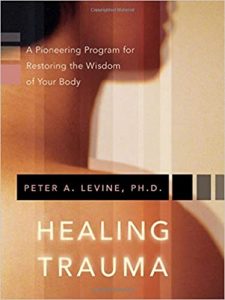
This is a practical guide to assist readers on how to implement SE® techniques as a self-help method.
The book explains the underpinnings of this therapeutic approach and describes 12 stages to heal trauma.
It includes exercises and recordings to guide you through them.
Available on Amazon.
3. It Won’t Hurt Forever: Guiding Your Child Through Trauma – Peter A. Levine

In this audiobook, Levine introduces SE® in the context of parenting.
The book is meant to assist caregivers in helping their children navigate and recover from trauma.
Available on Amazon.
4. Freedom From Pain: Discover Your Body’s Power to Overcome Physical Pain – Peter A. Levine and Maggie Phillips
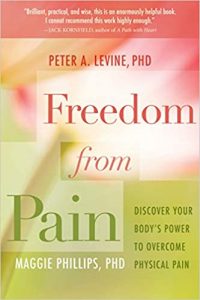
This book helps people understand unresolved emotional trauma stored in the body as chronic pain and how to resolve it through SE®.
Available on Amazon.
5. Sexual Healing: Transforming The Sacred Wound – Peter A. Levine

Readers are introduced to SE® bodily practices to release sexual trauma, helping them to understand signs and actions in order to feel safe and contained in their own body.
Available on Amazon.
6. The Body Keeps the Score: Brain, Mind, and Body in the Healing of Trauma – Bessel van der Kolk
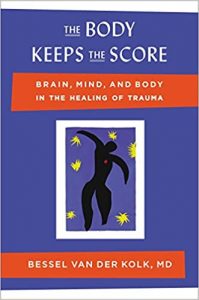 Adverse childhood experiences can result in long-term negative effects.
To explain the effects of trauma on brain development, Bessel van der Kolk compiled this book, which also includes several case studies.
In addition, treatment options are discussed which includes sports, meditation, yoga, drama and neurofeedback. The book is pretty foundational to somatic therapies, and is highly recommended.
Available on Amazon.
If you are interested in getting professional training in SE®, you can visit the official website to explore programs and more resources.
Relevant PositivePsychology.com Tools
You can also check out some of the following resources that may complement SE® techniques:
This Breath Awareness worksheet helps bring conscious attention to your breath before practicing other breathing exercises.
The Three Steps to Deep Breathing worksheet will guide you to develop slow deep breathing.
You can use this Anchor Breathing exercise to learn how to be present using your breath as an object to focus on.
This Five Senses Worksheet can help you learn how to use your senses to stay present and connected with your body.
If you’re looking for more science-based ways to help others enhance their wellbeing, this signature collection contains 17 validated positive psychology tools for practitioners. Use them to help others flourish and thrive.
17 Top-Rated Positive Psychology Exercises for Practitioners
Expand your arsenal and impact with these 17 Positive Psychology Exercises [PDF], scientifically designed to promote human flourishing, meaning, and wellbeing.
Created by Experts. 100% Science-based.
A Take-Home Message
Despite the scarcity of rigorous scientific studies on the topic, body–mind therapies and SE® in particular offer an alternative approach that can be highly effective in healing and transcending trauma.
Seeing traumatic symptoms as an interrupted natural response and as unreleased energy in the body rather than a disease can lift a burden for traumatized people.
Furthermore, SE® can also provide hope as it acknowledges and works with the wisdom and resources residing in yourself.
We hope you enjoyed reading this article. Don’t forget to download our three Positive Psychology exercises.
- Andersen, T. E., Lahav, Y., Ellegaard, H., & Manniche, C. A. (2017). A randomized controlled trial of brief Somatic Experiencing for chronic low back pain and comorbid post-traumatic stress disorder symptoms. European Journal of Psychotraumatology, 8(1).
- Andersen, T. E., Ellegaard, H., Schiøttz-Christensen, B., Mejldal, A., & Manniche, C. (2020) Somatic Experiencing® for patients with low back pain and comorbid posttraumatic stress symptoms: A randomized controlled trial. European Journal of Psychotraumatology, 11(1).
- Barrat, B. B. (2010). The emergence of somatic psychology and bodymind therapy. Hampshire, UK: Palgrave MacMillan.
- Brom, D., Stokar, Y., Lawi, C., Nuriel-Porat, V., Ziv, Y., Lerner, K., & Ross, G. (2017). Somatic Experiencing for posttraumatic stress disorder: A randomized controlled outcome study. Journal of Traumatic Stress, 30, 304–312.
- Craig, A. D. (2010). The sentient self. Brain Structure and Function, 214, 563–577.
- Damasio, A. (2003). Feelings of emotion and the self. Annals of New York Academic Science, 1001, 253–261.
- Leitch, M. L. (2007). Somatic experiencing therapy with tsunami survivors in Thailand: Broadening the scope of early intervention. Traumatology, 13(3), 1–10.
- Leitch, M. L., Vanslyke, J., & Allen, M. (2009). Somatic experiencing treatment with social service workers following hurricanes Katrina and Rita. Social Work, 54, 9–18.
- Levine, P. A. (1986). Stress. In M. G. H. Coles, E. Donchin, & S. W. Porges (Eds.), Psychophysiology: Systems, processes, and applications. New York, NY: Guilford Press.
- Levine, P. A. (2001). It won’t hurt forever: Guiding your child through trauma [audiobook]. Sounds True.
- Levine, P. A. (2008). Healing trauma: A pioneering program for restoring the wisdom of your body. Canada: Sounds True.
- Levine, P. A. (2014). Sexual healing: Transforming the sacred wound. Sounds True.
- Levine, P. A., & Frederick, A. (Contributor) (1997). Waking the tiger: Healing trauma through the innate capacity to transform overwhelming experiences. Berkeley, CA: North Atlantic Books.
- Levine, P. A., & Phillips, M. (2012). Freedom from pain: Discover your body’s power to overcome physical pain. Sounds True.
- Muehsam, D., Lutgendorf, S., Mills, P. J., Rickhi, B., Chevalier, G., Bat, N., … & Gurfein, B. (2017). The embodied mind: A review of functional genomic and neurological correlates of mind-body therapies. Neuroscience and Biobehavioral Reviews, 73, 165–181.
- Parker, C., Doctor, R. M., & Selvam, R. (2008). Somatic therapy treatment effects with tsunami survivors. Traumatology, 14(3), 1–10.
- Payne, P., Levine, P. A., & Crane-Godreau, M. A. (2015). Somatic experiencing: Using interoception and proprioception as core elements of trauma therapy. Frontiers in Psychology, 6(93), 1–18.
- Schmalzl, L., Crane-Godreau, M. A., & Payne, P. (2014). Movement-based embodied contemplative practices: definitions and paradigms. Frontiers in Human Neuroscience, 8, 205.
- Winblad, N. E., Changaris, M., & Stein, P. K. (2018). Effect of Somatic Experiencing resiliency-based trauma treatment training on quality of life and psychological health as potential markers of resilience in treating professionals. Frontiers in Neuroscience, 12(70), 1–10.

Let us know your thoughts
Related articles


Read other articles by their category
- Body & Brain (49)
- Coaching & Application (57)
- Compassion (26)
- Counseling (51)
- Emotional Intelligence (24)
- Gratitude (18)
- Grief & Bereavement (21)
- Happiness & SWB (40)
- Meaning & Values (26)
- Meditation (20)
- Mindfulness (45)
- Motivation & Goals (45)
- Optimism & Mindset (34)
- Positive CBT (28)
- Positive Communication (20)
- Positive Education (47)
- Positive Emotions (32)
- Positive Leadership (18)
- Positive Parenting (4)
- Positive Psychology (33)
- Positive Workplace (37)
- Productivity (17)
- Relationships (46)
- Resilience & Coping (36)
- Self Awareness (21)
- Self Esteem (38)
- Strengths & Virtues (32)
- Stress & Burnout Prevention (34)
- Theory & Books (46)
- Therapy Exercises (37)
- Types of Therapy (64)
What our readers think
Working with Ptsd this knowledge will help me how I support and will help me how I handle my own anxieties.
Great articel, great summary. Can you or anyone provide some recommendations for therapists? Thanks anja
Hi Anja,
Psychology Today has a great directory you can use to find therapists in your local area. Usually, the therapists provide a summary in their profile with their areas of expertise and types of issues they are used to working with.
I hope this helps.
Kind regards,
Julia | Community Manager
What a great, terrific, helpful, informative article! Thank you!
This article was extremely informative regarding Somatic Experiencing. I am looking forward to looking at several of the resources shared in the article.
Thank you!
Hi,
Thank you for a wonderful article! Simple to follow, informative and inspiring.
What really caught my interest was this sentence:
Research on interoception suggests that this sense of the body’s internal state relates to the sense of self and cognitive and decision-making processes, which are affected by trauma (Craig, 2010; Damasio, 2003).
I have searched for the research you are referencing, but can’t seem to find it. Maybe you can help guide me in the right direction?
Hi Linda,
Glad you enjoyed the article! You can find these references as follows:
Craig (2010) – https://doi.org/10.1007/s00429-010-0248-y
(available for free on ResearchGate)
Damasio (2003) – https://doi.org/10.1196/annals.1279.014
(Paid access I think!)
Hope this helps!
– Nicole | Community Manager